How to Get Your Micro-Resort Featured in the Press
Most of us pour everything into the build. The cabins, the hot tubs, all the little details.
Then the property opens, and we wait for the world to notice.
It usually doesn't. Not on its own.
Press coverage is one of the most underused growth channels in hospitality. One good article can send you bookings for years, boost your SEO, and make lenders and partners take you seriously.
Yet most small operators have no idea how to get it. PR feels like something reserved for hotel chains with agencies on retainer.
So this week I went straight to the person who has spent 20 years building the machinery behind media coverage.
Our guest is Brett Farmiloe, founder and CEO of Featured.com, the platform experts and PR teams use to find media opportunities and earn coverage. In 2025 his team acquired and revived Help a Reporter Out (HARO), the legendary service that connected journalists with sources for over a decade. If a reporter needed an expert, HARO was where they went. Now Brett is rebuilding it, email by email.
And here is the part I love. His founder journey started in an RV. After quitting his job as a financial auditor, Brett and three friends drove 16,000 miles across 38 states, interviewing 300 people about how they found meaning in their work. His biggest takeaway: people have expertise but no outlet to share it. He has been building those outlets ever since, including another recent revival with Connectively.
If you run a unique stay, a micro-resort, or any hospitality business and you want to know how press actually works in 2026, this one is for you.
Anastasia: Brett, let's start with the belief that holds most small operators back. They think PR is for big brands with big budgets. You have watched thousands of experts earn coverage through HARO and Featured. Is that belief true, and what does a two-cabin retreat owner actually have that a Marriott doesn't?
Brett: Earned experience. And nothing holding them back from sharing unique perspective.
Let’s think about the unique perspectives that a two-cabin retreat owner has over a corporate hotel chain. They can speak deeper about what’s happening on a local level. Their story hits harder, in terms of trends, than a data-driven study that supports the trend.
For example, if you’re a journalist, would you rather feature a story or a statistic? It’s the job of a journalist to uncover the stories. That’s what I think the retreat owner has over a larger company. That, and no PR person to hold them back from sharing that story.
Anastasia: I would love to learn about your playbooks. Two of them. First, the new build. Say a reader is opening their micro-resort in six months and gives you one hour of their week for the next 90 days. What exactly would you have them do, step by step, so they open with press momentum instead of silence?
Brett: The first hour is spent doing research on competitors. Where are they showing up? How are they showing up? What’s different about how you want to show up?
The second hour is establishing the baseline foundation, and validating that you are a real entity. Create online profiles that can be used as signals that AI can cite. Create a Google Business profile, and other profiles for where your competitors are appearing.
Third hour is sending a press release. The objective of a new micro-resort is to establish themselves as a viable entity online. Create the profiles, then syndicate the distribution across reputable outlets. Announce that you’re coming. Get people excited.
From there, each hour is about trying something, measuring the effectiveness, and doubling down on what works for you and your business. That’s marketing.
PR isn’t one thing in 2026. It’s pitching podcasts, finding journalists, responding and monitoring journalist requests, sending press releases, finding creators to collab with, award submissions, speaking gigs, GEO, and so much more.
I actually love the idea of one hour a day devoted to PR though. Consistency is where most small businesses fail. Which, is why there’s more marketing agencies than coffee shops in the US. Time is the constraint.
Anastasia: Second playbook. An existing property. The stay is open, reviews are good, but the press has never called. Same deal, one hour a week for 90 days. Walk us through the steps to go from invisible to featured.
Brett: Almost the same playbook. Research competitors. Identify the gaps. Fill the gaps. Secure the foundation, from a marketing perspective.
Once the foundation is secure, what’s the differentiation? What’s the message? What’s the strategy for what you want to say, on repeat, across the media? How can you then take that message, and support the journalists, publishers, and creators who need to consistently create content with interesting stories?
And/or, do you need to take that message to the press, or do you just rely on your owned media? Do YOU become the press? Do you post to your own website, your LinkedIn, your newsletter, establish a Substack, start a Medium account?
Which gets back to the same playbook: try stuff, measure it, double down on what works.
Anastasia: Now the AI elephant in the room. More and more travelers ask Claude where to stay instead of Googling it. You work on GEO, generative engine optimization. When an AI decides which properties to recommend, what is it actually pulling from? Is press coverage the new SEO?
Brett: Earned media certainly seems to impacting who AI recommends. We’re seeing a huge influx of demand across Connectively, Featured, and HARO - the brands we operate, all of which are optimized to help democratize access to earned media.
Here’s the thing: the space is moving really fast. What works yesterday, won’t work today and who knows what’ll happen tomorrow. That said, the world has changed. Your business needs AI visibility. It’s no longer just appearing on a search engine. You’ve got an AI engine to consider now.
That’s overwhelming for a busy small business owner. They know their business. They don’t know AI visibility, typically. So, I’ll give you the one truism that kept me sane in running an SEO agency for a decade before selling it in 2021: don’t pay much attention to algorithm updates and changes. Just build a good business, and do good marketing.
What do I mean by that?
If it feels like a shortcut, don’t do it. If it’s hard, you’re probably on the right track. If it’s hard and it feels like the right way to reach your customers, try it. And if it works, keep doing it as much as you can until it doesn’t work.
Anastasia: If a micro-resort owner wants to show up when someone asks an AI for "unique cabins near Austin," what are the two or three moves that matter most right now?
Brett: I’d do a GEO visibility audit on Featured. I’d see which sites currently have visibility across ChatGPT, Perplexity, Claude, and Gemini. From that site list, is there a way that you could be helpful to the publishers or journalists who are listed?
The quickest way to get AI visibility is to be visible on the pages that are visible to AI. Go where the momentum is.
If that’s not possible, what are the adjacent spaces that might signal a gap you could fill? For example, do a GEO visibility audit for “unique cabins near Houston” (or San Antonio, Dallas, etc.). Do the sites that have AI visibility for Dallas, have a similar Austin page? If not, would they have interest in an Austin page? That’s when you can make the pitch, either to write it for them or introduce yourself as a source who could help.
That, and press releases. What’s the angle that allows you to send out a press release about a unique cabin near Austin? Is there an award you can apply to and win? Is there data that supports a list that can be shared? For example, is your property one of the most unique because it’s one of ten properties in the Austin area with a favorable rating (ie - 4.8 or above) with a set criteria (minimum of 100 reviews)?
Sometimes, you’ve got to create the story through packaging. That’s something I’m sure anyone with a unique cabin property can relate to, and excel at. Great parallels.
Anastasia: Let's zoom into the mechanics behind those playbooks. How do HARO and Featured actually work? A journalist posts a request, and then what happens on the expert's side?
Brett: On HARO, a journalist posts a request for a source. Three times per day, HARO sends an email digest of all those requests to subscribers. If you can be helpful to a journalist’s story, you can email them directly with your pitch. From there, they’ll reply if they’re interested.
Connectively is like HARO, but in a platform. Instead of getting an email three times per day, you can log into Connectively.us, search for and reply to relevant queries. Publishers select the best answers to questions, and publish insights with attribution to you in articles. You’re able to set alerts on Connectively as well so that you can notified when there’s something relevant.
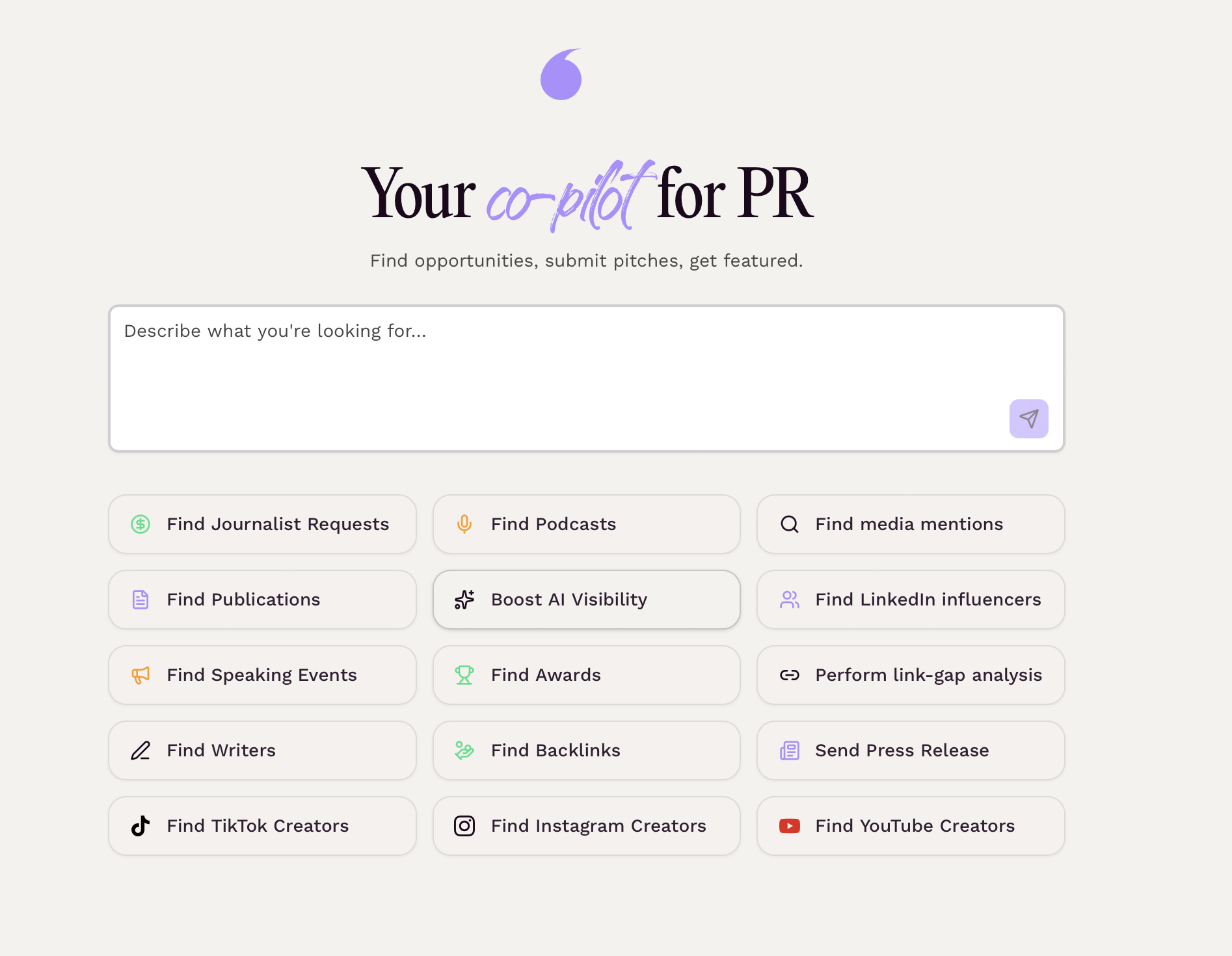
Featured is a co-pilot for PR. It’s almost like a ChatGPT for PR. You can do almost anything related to PR, on Featured. From setting up media monitoring to finding podcasts to running GEO audits to identifying and reaching out to influencers.
Anastasia: Say I own a treehouse retreat in the Texas Hill Country. What kinds of journalist requests should I be watching for? I assume it is not just travel writers. Where are the non-obvious opportunities for a hospitality operator?
Brett: I think the best thing is to leverage technology to do the watching for you. For example, on Connectively we have a feature called Connectively AI. You’re able to add content like FAQs from your website, articles you’ve written, and more. That content teaches Connectively which questions might be relevant. When there is a relevant question or query it identifies, Connectively will actually draft you a pitch using your knowledge base, that can serve as a starting point for you to edit, review, and submit.
Or, on Featured, you can set up a Workflow to monitor journalist requests across HARO, Connectively, Substack, LinkedIn, X, and other platforms. Just put in what you want in a natural language prompt: “I own a treehouse retreat in the Texas Hill Country. Find me journalist requests.” From there, you should start to get matched with opportunities, as often you’d like Featured to check for them: hourly, daily, weekly - and get notified via Slack or email.
That way, you’re not watching. You’re acting on the stuff that matters, in the moment it matters, so you can best maximize your time on moving your business forward.
Anastasia: Walk us through a winning pitch. A journalist posts a request, and 200 people respond. What separates the answer that gets quoted from the 199 that get deleted? Length, structure, timing, credentials.
Brett: I use the HARO acronym as a guide here: Helpful, Authentic, Relevant, and On Time.
Helpful: are you helping the journalist do their job?
Authentic: are you human? Or AI?
Relevant: did you follow their exact instructions? Are you exactly who they’re looking for?
On Time: is your reply timely, and before deadline?
If you’re meeting all of those criteria, you’d ahead of most of the 200 people who responded.
Anastasia: Now the flip side. What are the mistakes that get a pitch instantly ignored? The things people do that make journalists roll their eyes.
Brett: Same stuff as above. The eye roll comes when you have to start a sentence with, “While I don’t have any unique cabin properties in Austin, I do have a unique cabin property in Dallas…”
Journalists are some of the most specific human beings I’ve ever met. If they asked for Austin, don’t give ‘em Dallas.
Anastasia: Beyond journalist requests, Featured covers podcasts, bylines, speaking, and awards. For a micro-resort owner with limited time, how would you rank those channels? Which one delivers the most bookings per hour invested?
Brett: If there’s a theme here, it’s double down on what works while the getting is good. No one is going to tell you what works. You’ve got to try and find out for yourself.
You might crush it with podcasts, while bylined articles fall flat. You might never get featured when replying to journalist requests with HARO, but you might find success with Connectively.
Allow yourself to experiment. Learn. Double down.
Anastasia: Give us a story. The most unlikely person or smallest business you have seen land major coverage through your platforms. What did they do right?
Brett: There was once a 94-year old architect in NYC who wrote in to thank us once. He had a storied, very successful career that spanned 50+ years. At yet, at 94 years old, felt very compelled and determined to share his knowledge on our platforms.
It goes back to why I started these companies in the first place: everyone has knowledge to share, but we lack a meaningful outlet to share that knowledge.
There’s millions of people who have used HARO, Featured, and Connectively for that exact reason, and it’s fun to support their success with media placements. It’s like rewarding the hard working people who never, or rarely, get the spotlight because they’ve been so busy working.
But everyone has a story to share, and everyone deserves their own spotlight.
Anastasia: Last question, and I have to ask. You once ate Hot Pockets for breakfast, lunch, and dinner for 30 days to bootstrap a startup. What did that month teach you about building companies, and where can readers find you if they want to talk PR for their property?
Brett: Here’s context on the Hot Pocket story. Our objective was to find corporate sponsors to fund an RV roadtrip around the country. Hot Pockets couldn’t write a check, but they did give us essentially an endless supply of Hot Pocket vouchers. My friend and I ate them for 30 days straight, breakfast, lunch, and dinner to save money. If you’ve seen the movie Supersize Me, it was just like that. Very, very bad. Sodium sweats. Couldn’t think clearly. All the things.
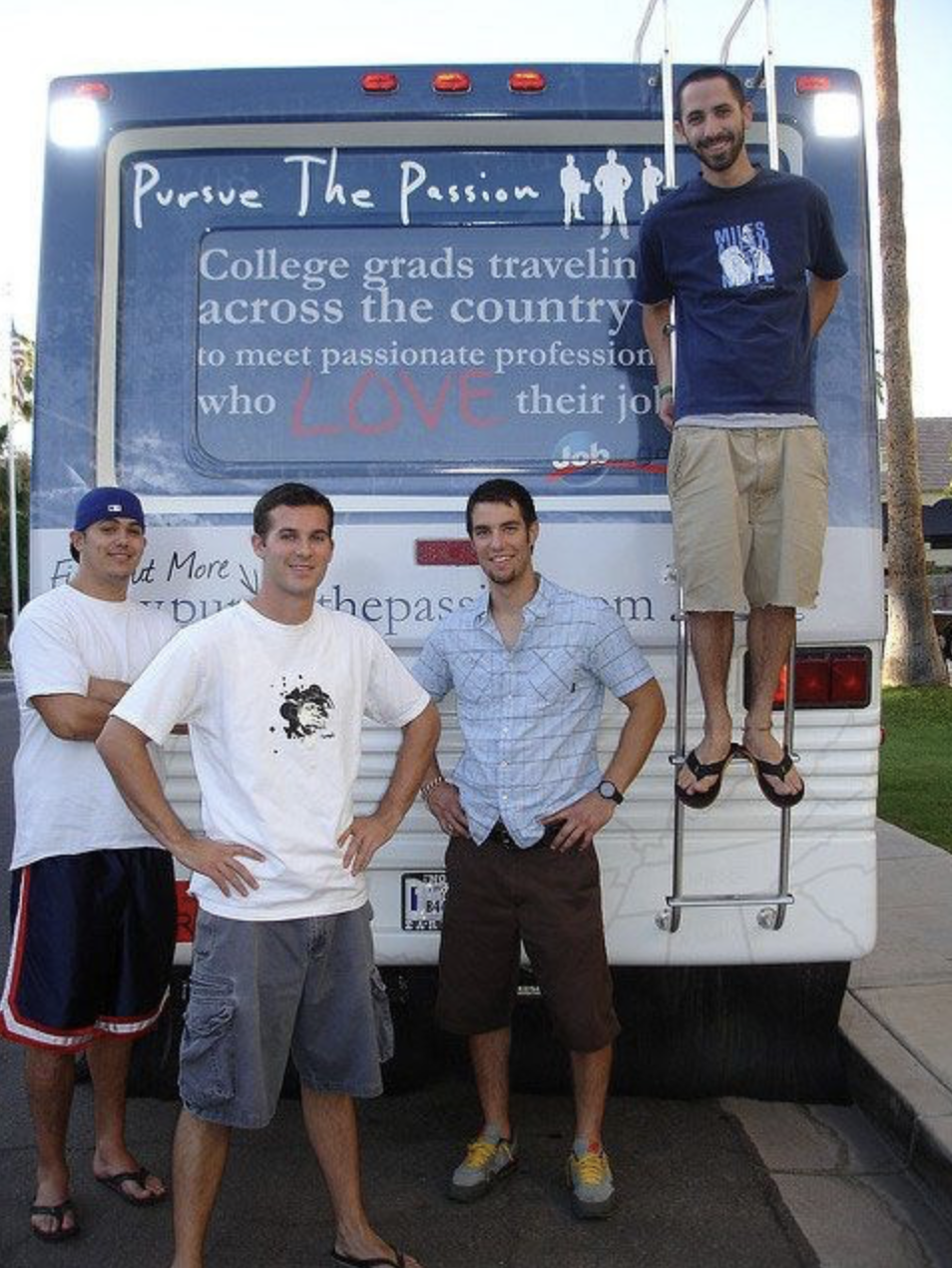
One day, we couldn’t do it anymore. We literally went through a week of detox. And then we started to think a little more clearly, and a little more deeply about who would actually be interested in sponsoring our RV tour.
Funny enough, a venture-backed job board was headquartered a block away. We cold pitched them. We got a meeting. Walked to the meeting. And walked out with a sponsorship that changed our entire lives.
Many lessons there.
What you’re looking for is often in your own backyard, if you can have the context to clearly see what you have in front of you.
You can find me on LinkedIn, and I hope that what we’ve built with Featured, HARO, and Connectively is supportive of you and your business. Thanks for reading.
Here is what strikes me about Brett's story.
He built a career on one simple observation: everyone is an expert in something.
The couple running a glamping site in the desert knows things a journalist writing about travel trends desperately needs. The problem was the missing bridge between the people who have it and the people who publish.
Your property is a story. The land you found, the permits you fought for, the guests who loved what you have created. Someone out there is writing an article that needs exactly what you know.
The coverage compounds while you sleep, and unlike an ad, nobody can turn it off.
That's all for today,
Till next week, dear readers.
Anastasia
p.s. I especially loved how Brett said, "what you are looking for is often in your own backyard, if you have the context to clearly see..."
You can apply it literally and figuratively: to people in our lives whom we don't appreciate in time, or to opportunities we search for far beyond our horizons, when often the best ones are right under our noses.
I mentioned to you recently that I'm creating a layout for a tiny home, and it will literally be in my backyard.
We have a nice wooded area next to our home and plenty of space (unless I find another piece of land in the meantime). I call this tiny home a prototype: it will allow me to focus precisely on how I want to build it and what goes into it, and to fully control the output simply due to proximity.